
Useful Resources
This page is here to help you better understand mental health, therapy, and some of the tools we may use in our work together. You’ll find information, psychoeducation, and practical exercises that you can explore at your own pace.
These resources can be helpful if you’re currently in therapy, thinking about starting therapy, or simply wanting to learn more about your mental wellbeing. You’re welcome to return to this page as often as you like, and to bring any questions or reflections into your sessions.
Please note that these resources are not a replacement for therapy or urgent support, but they can be a helpful addition to ongoing work.
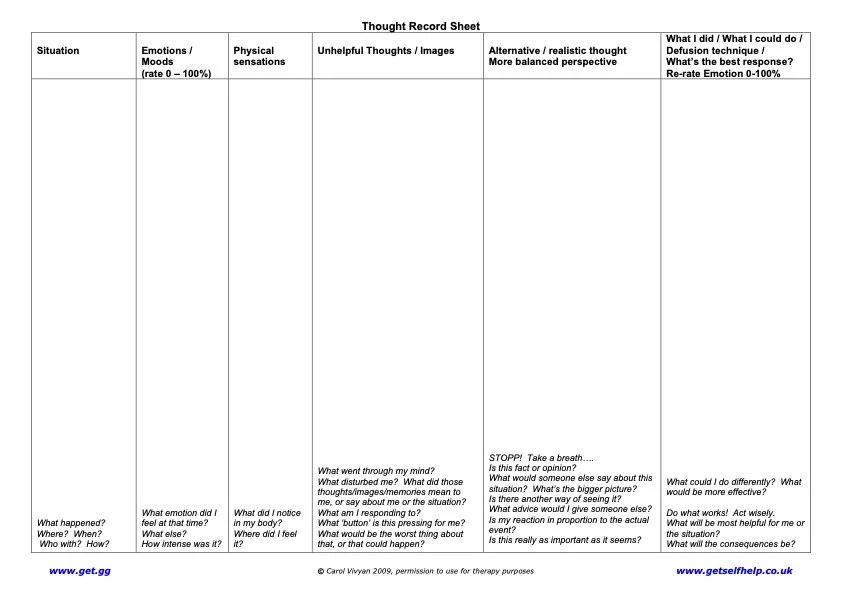
Thought Record Sheet (5 columns) - use the worksheet to identifypatterns of behaviour or negative thoughts. The idea is to understand your thoughts first, and then gradually learn how to challenge the ones that aren’t supporting you.
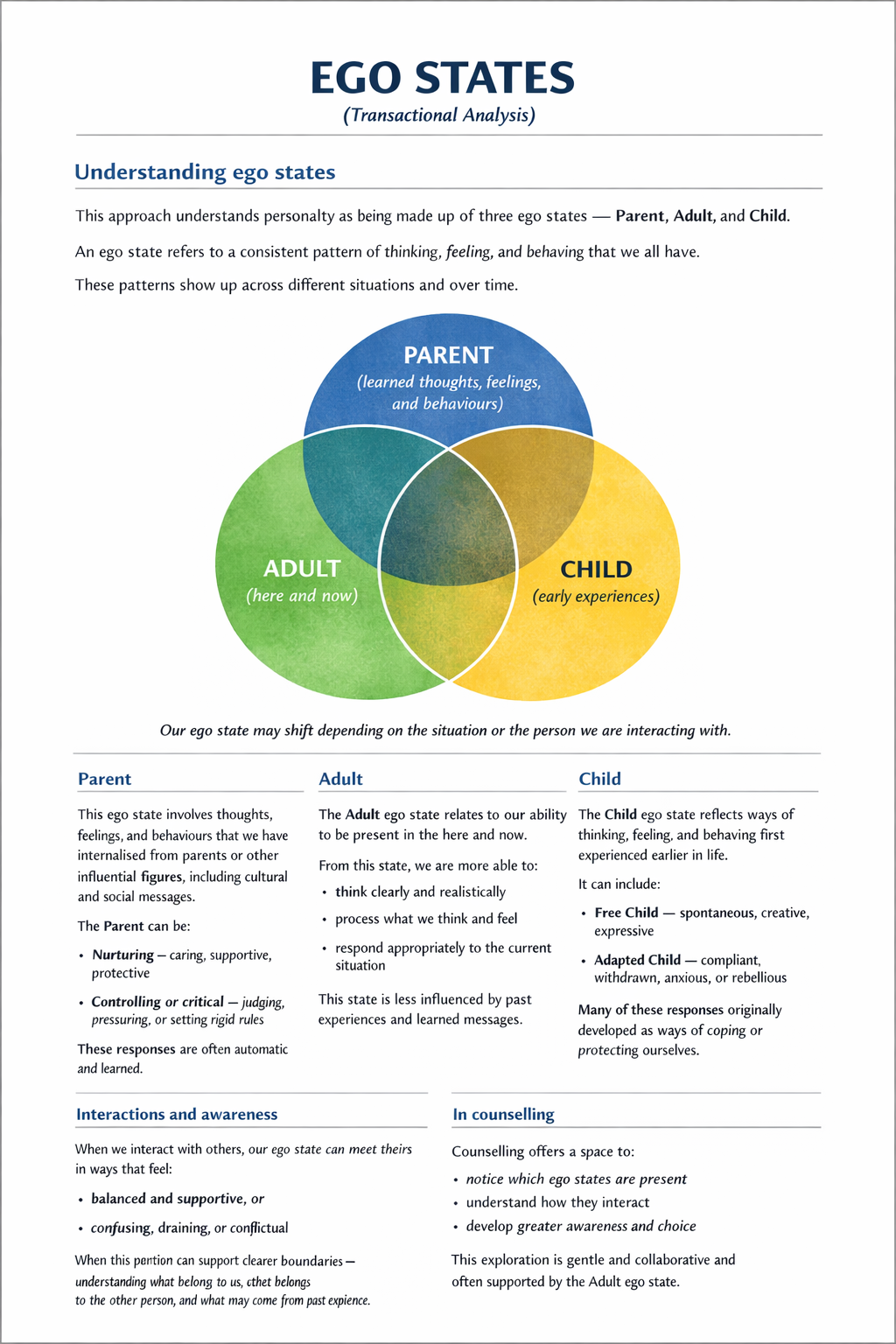
Ego States (Transactional Analysis) - This theory considers the personality as being divided into three ‘ego states’ [PARENT, ADULT and CHILD] - referring to consistent patterns of feeling, thinking and behaving that we all have, which show up in different situations.
7 Stages of Grief - The 7 stages of grief are a model describing common emotional responses to loss. It's crucial to remember these aren't linear, everyone's journey is unique, and some may skip stages or experience them in a different order or jump about between stages.

Depression Coping Wheel - Use the wheel to help identify and explore ways of coping with depression.
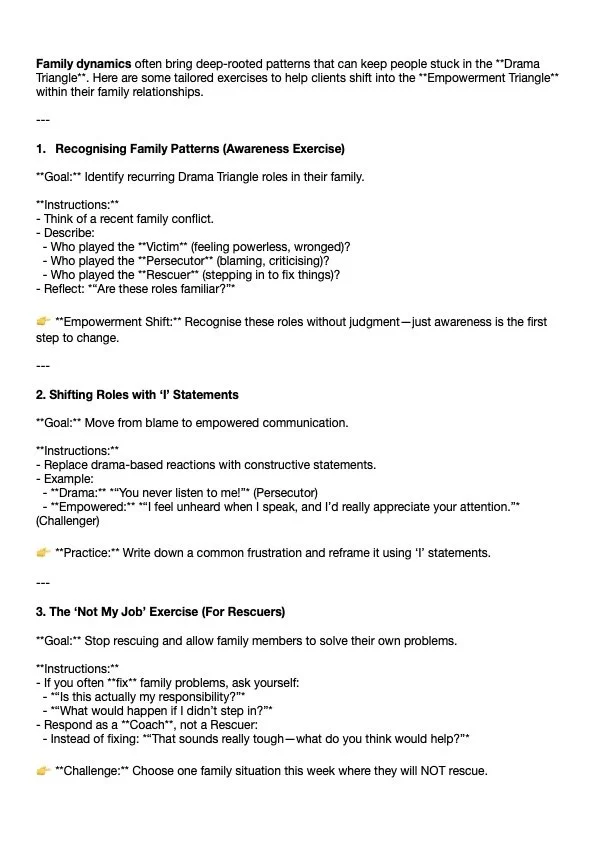
Family Dynamics often bring deep-rooted patterns that can keep people stuck in the Drama Triangle. Here are some exercises to help you shift into the Empowerment Triangle within your family relationships.
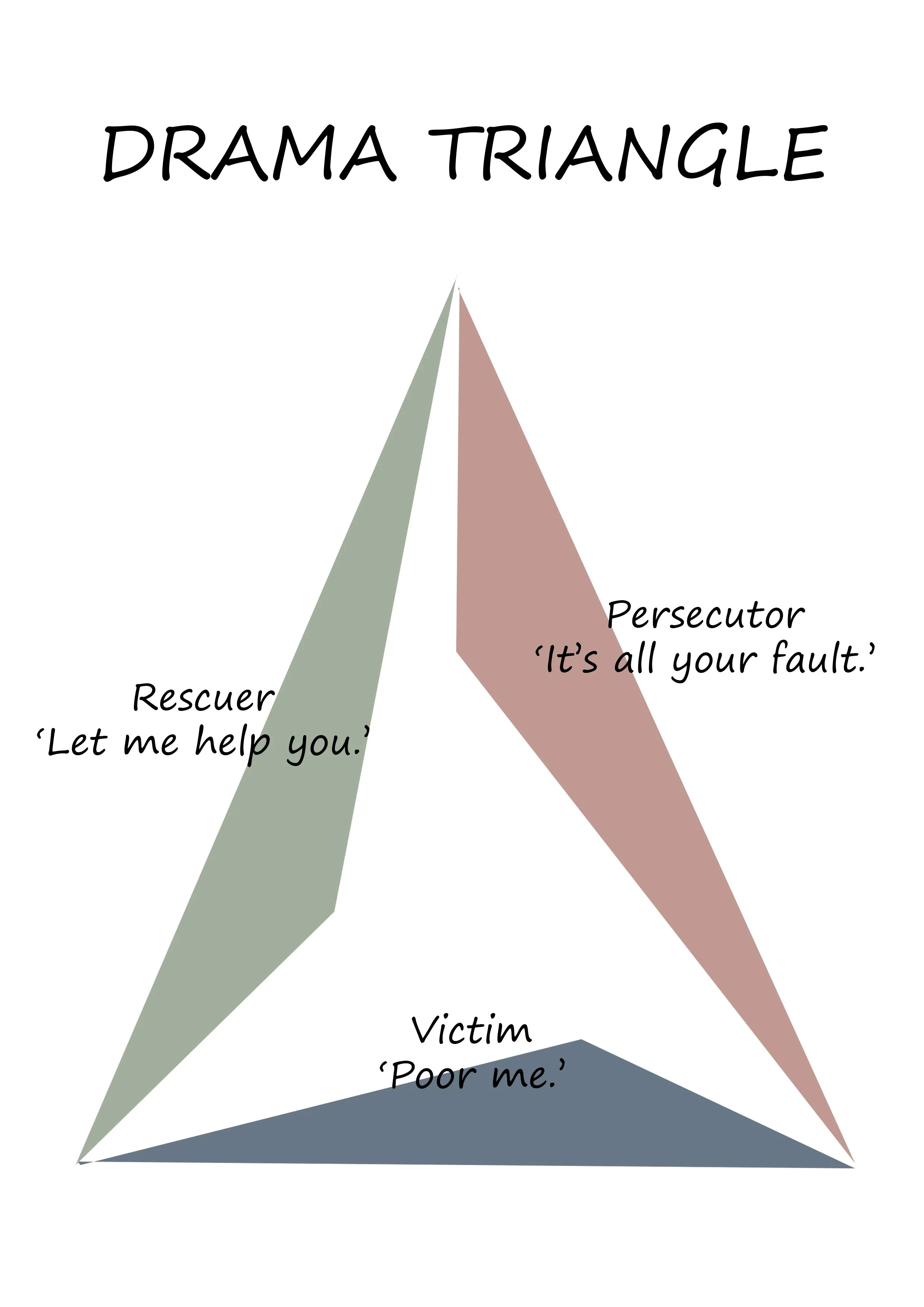
The Drama Triangle and the Empowerment Triangle help us understand unhealthy and healthy relationship dynamics. These frameworks can be useful to identify patterns in your interactions and make conscious shifts toward empowerment.
CBT Worksheets / Tools for Coping / Psychoeduction
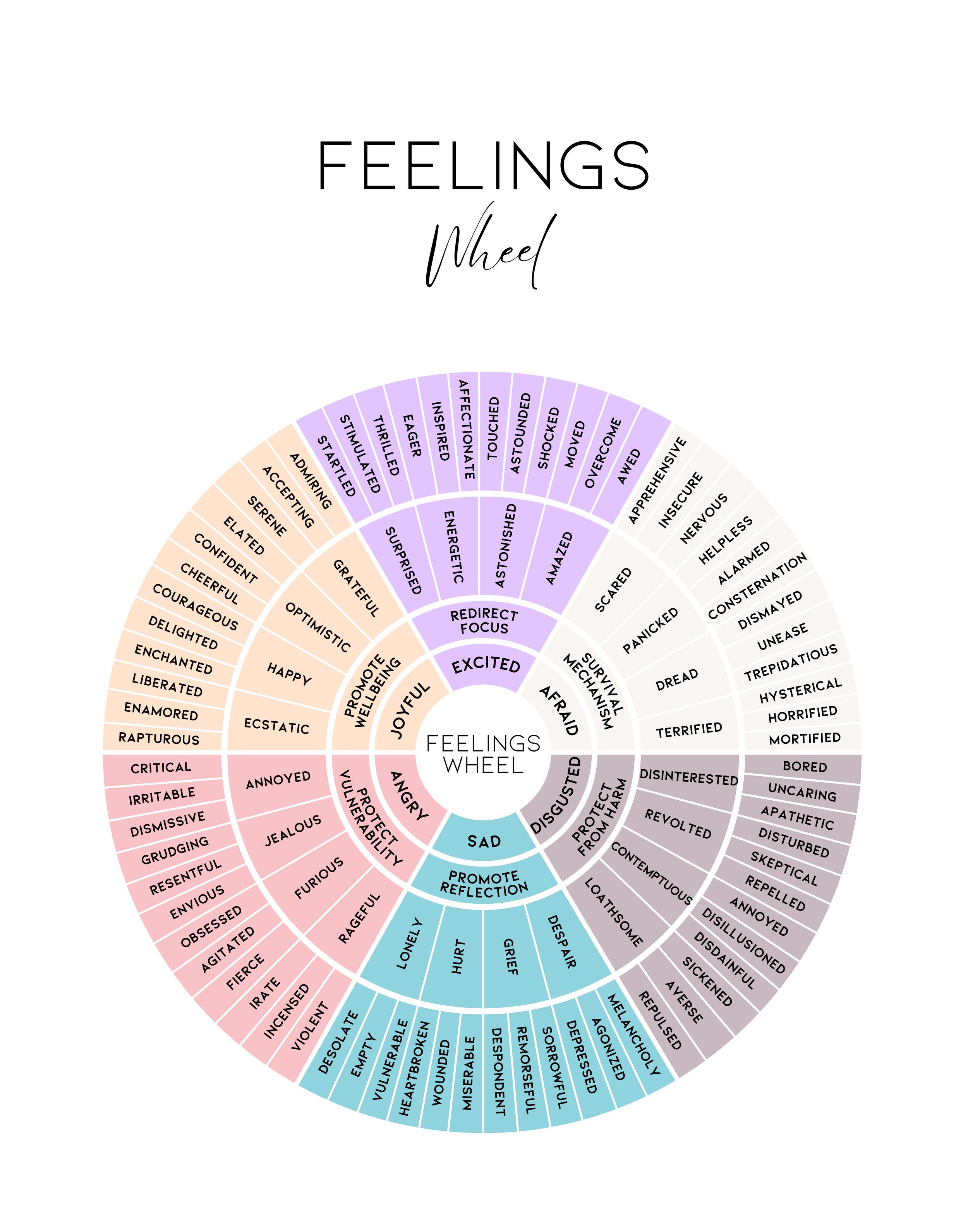
Feelings/Emotions Wheel - use the wheel to help identify and explore emotions. Start in the middle and work your way out.
Trauma - PTSD - Complex PTSD

Coping Skills Wheel - Use the wheel to help identify and explore ways of coping with overwhelming feelings.

Trauma Response Wheel - EFT (Emotion Focus Therapy) Use the wheel to help identify and explore your responses to trauma.
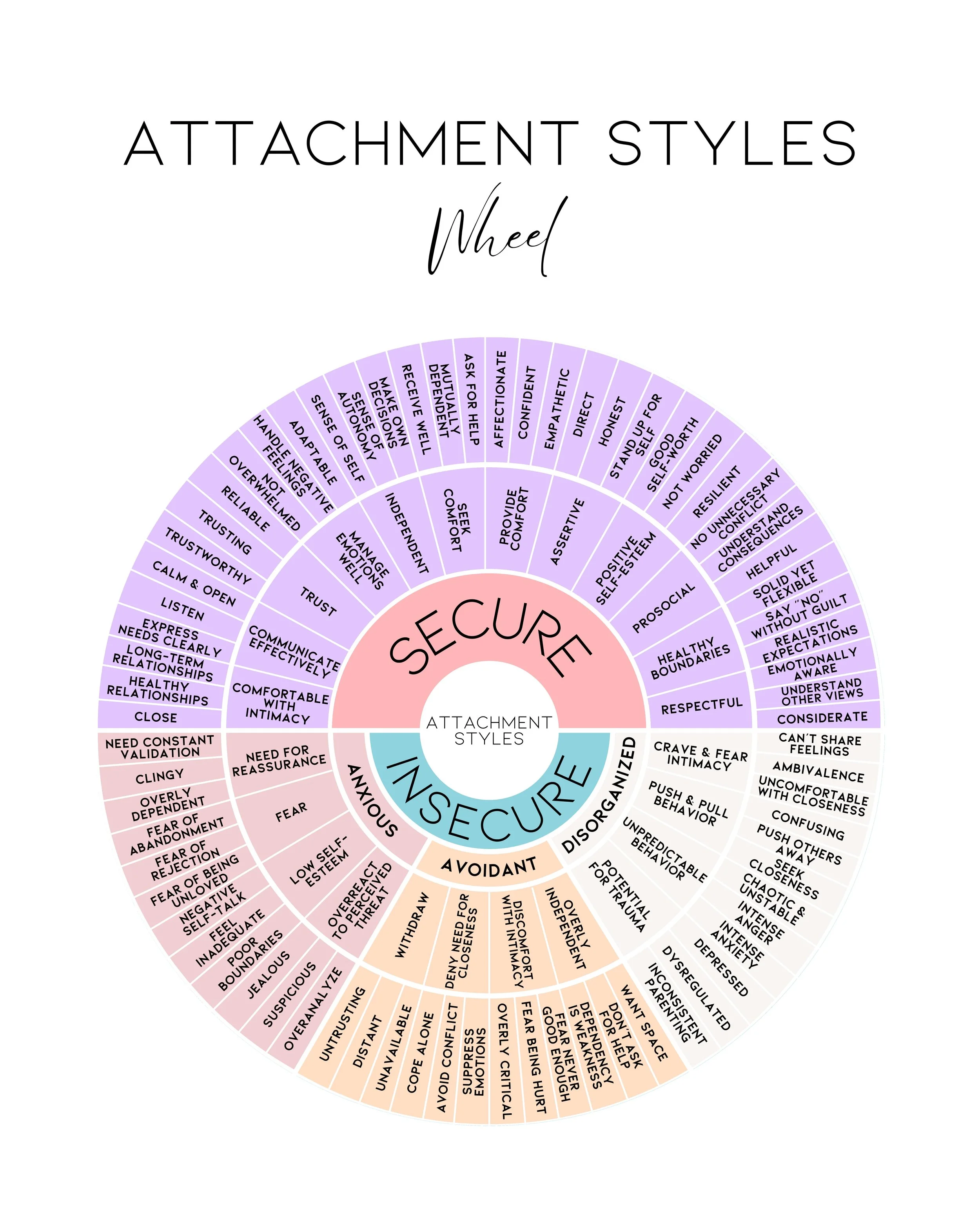
Attachment Style Wheel - Use the wheel to help identify and explore your attachment style.
Dissociative Experiences Scale - II
The Dissociative Experiences Scale measures a wide variety of types of dissociation, including both problematic dissociative experiences, and normal dissociative experiences (e.g., day-dreaming). It is a screening tool for dissociative disorders including Post Traumatic Stress Disorder.
Try it yourself: https://traumadissociation.com/des
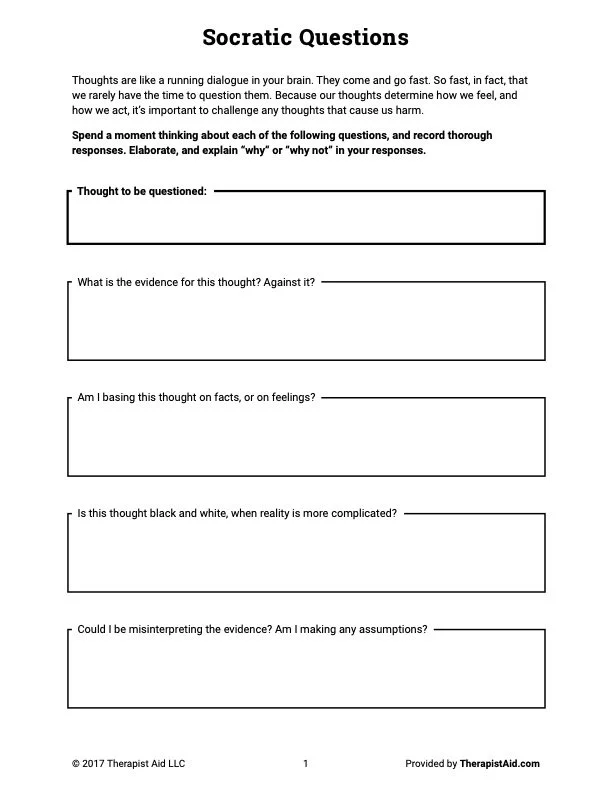
Socratic Questions - Thoughts come and go fast, so fast that we rarely have the time to question them. Because our thoughts determine how we feel, and how we act, it’s important to challenge any thoughts that cause us harm.

Enneagram personality tests analyze your core motivations, fears, and desires to determine which of nine distinct, interconnected personality types best describes you. Unlike behavioural tests, the Enneagram focuses on the why behind your actions, offering insights into personal growth, stress patterns, and relationships
International Trauma Questionnaire (ITQ)
The International Trauma Questionnaire (ITQ) is an 18-item self-report measure designed to assess symptoms of Post Traumatic Stress Disorder (PTSD) and Disturbances in Self Organisation (DSO), which together constitute Complex PTSD (CPTSD) in accordance with the International Classification of Diseases 11 (ICD-11) conceptualisation of trauma-related diagnoses.
https://novopsych.com/assessments/diagnosis/international-trauma-questionnaire-itq/ follow the link and click on administer now to take the questionnaire.
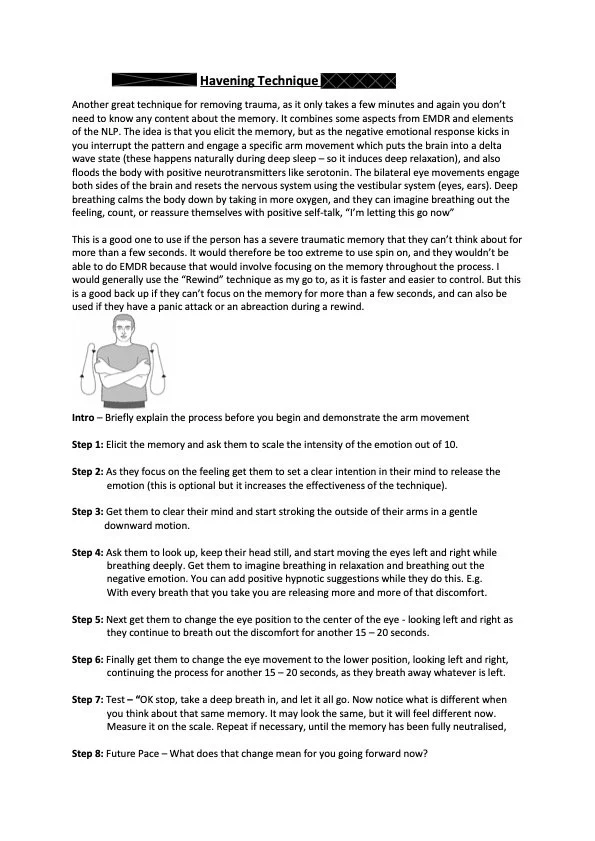
Havening Technique - A great technique for removing trauma that only takes a few minutes. It combines some aspects from EMDR and elements of the NLP.

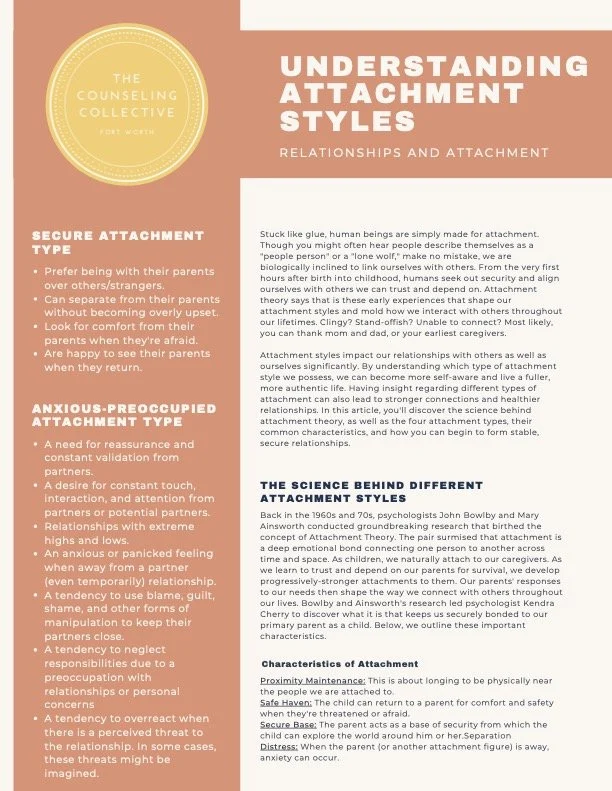
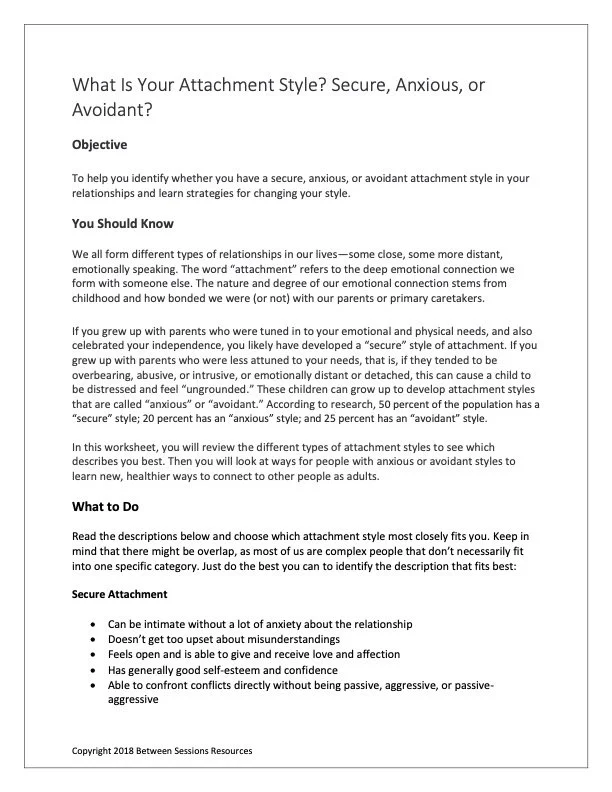
Understanding Attachment Style - information sheet on attachment styles
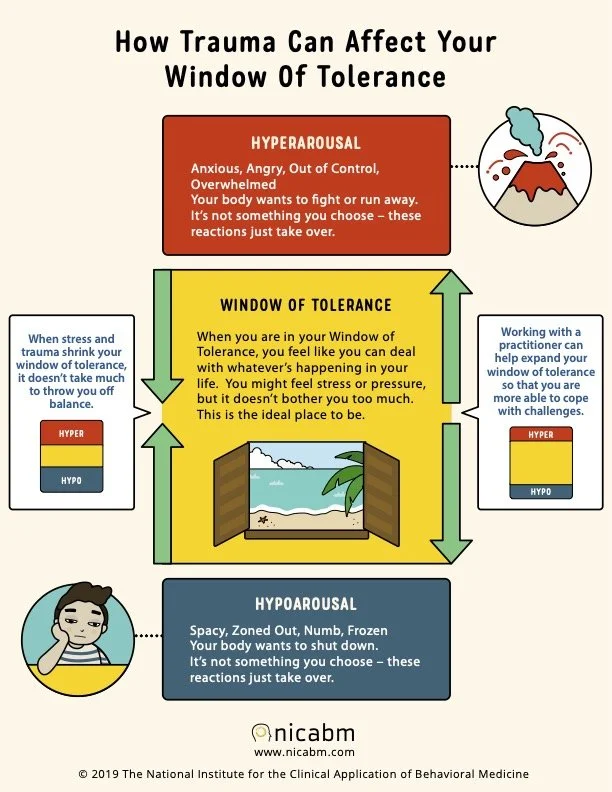
Window of Tolerance - A visual guide to how trauma can affect your window of tolerance.

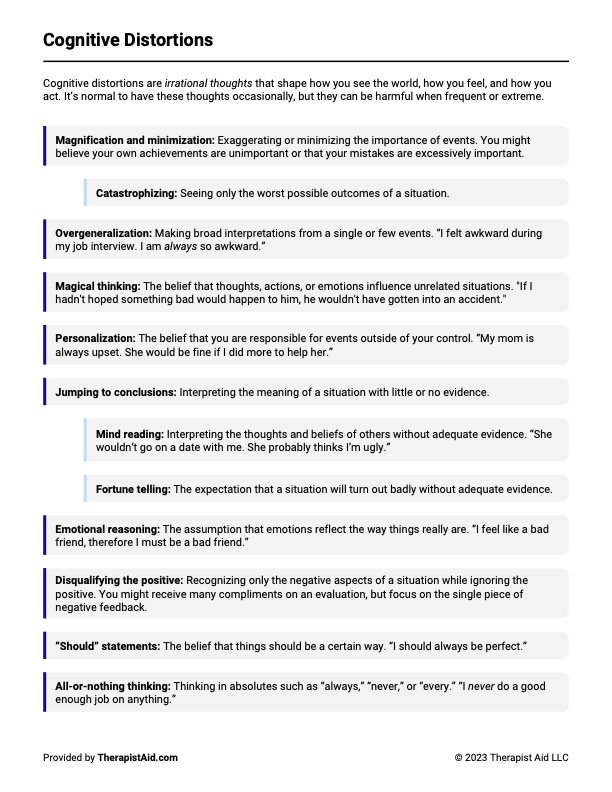
Cognitive Distortions - irrational thoughts that shape how you see the world, how you feel, and how act.

Anger - often acts as a "secondary emotion," a protective shield masking more vulnerable primary feelings of fear, hurt or pain because anger feels more powerful and less exposed than admitting weakness or pain. While anger is a valid emotion itself, recognising the underlying feelings allows for healthier processing and healing, as it signals deeper issues like unmet needs, perceived threats, or unresolved trauma

The Cycle of Change - This model helps understand the process of change and to identify what stage you are at.
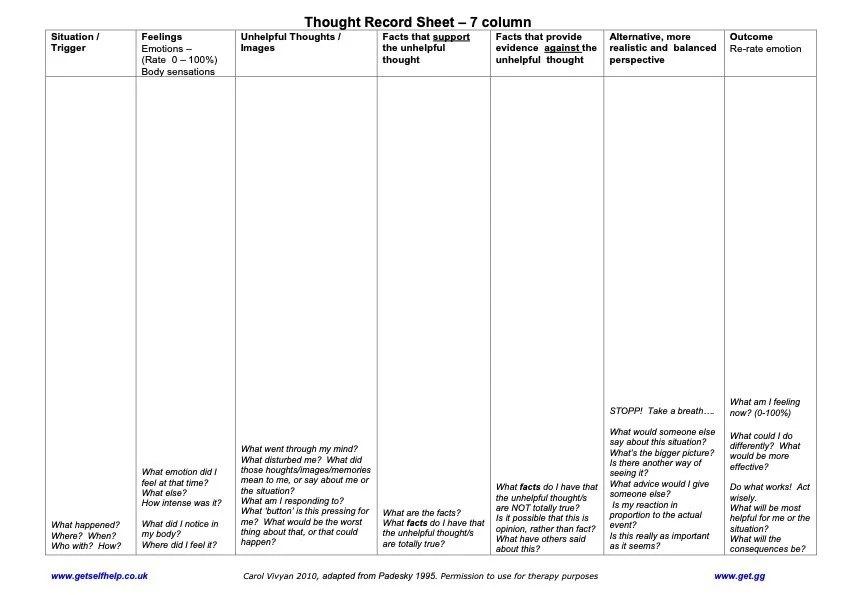
Thought Record Sheet (7 columns) - use the worksheet to identify patterns of behaviour or negative thoughts. The idea is to understand your thoughts first, and then gradually learn how to challenge the ones that aren’t supporting you.

Zones of regulation - This is a great tool to use with children to help them identify and regulate their emotions.

RAIN - A helpful acronym to bring awareness to emotional distress.
Theories
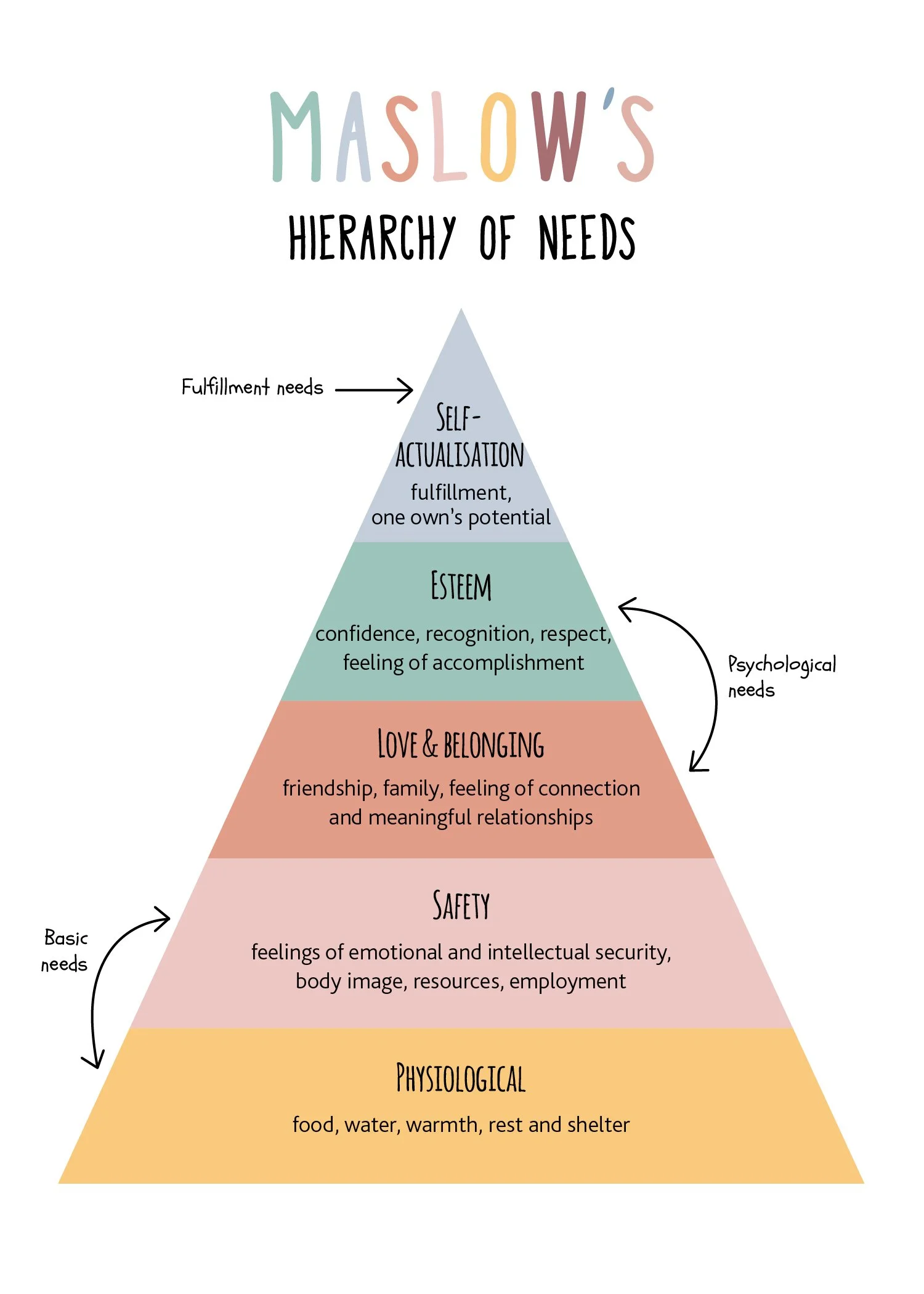
Maslow’s Hierarchy of Needs - This is a great tool to use with children to help them identify and regulate their emotions.

Shutdown Dissociation Scale (Shut-D) Try it yourself: https://traumadissociation.com/shut-d
The Shutdown Dissociation Scale (Shut-D) is a semi-structured interview, it was first published in 2011 to assess dissociative responses caused by reminders of traumatic stress. There are 13 questions. These questions have been designed for adults and cover experiences within the last 6 months or in the months since the trauma occured (for people who have experienced only a single trauma that occurred less than 6 month before).
Try it yourself: https://traumadissociation.com/shut-d
Attachment Style
Attachment styles describe the ways we’ve learned to connect with others, especially in close relationships. These patterns often develop early in life and can influence how safe we feel with people, how we ask for support, or how we respond when relationships feel uncertain.
In therapy, exploring attachment can help make sense of repeated relationship patterns and emotional responses. This isn’t about labelling or blaming—it’s about understanding what your experiences may have taught you, and gently exploring new ways of relating that feel more supportive.

Attachment Style Questionnaire - if you are unsure of your attachment style you can take this questionnaire to help you discover it.
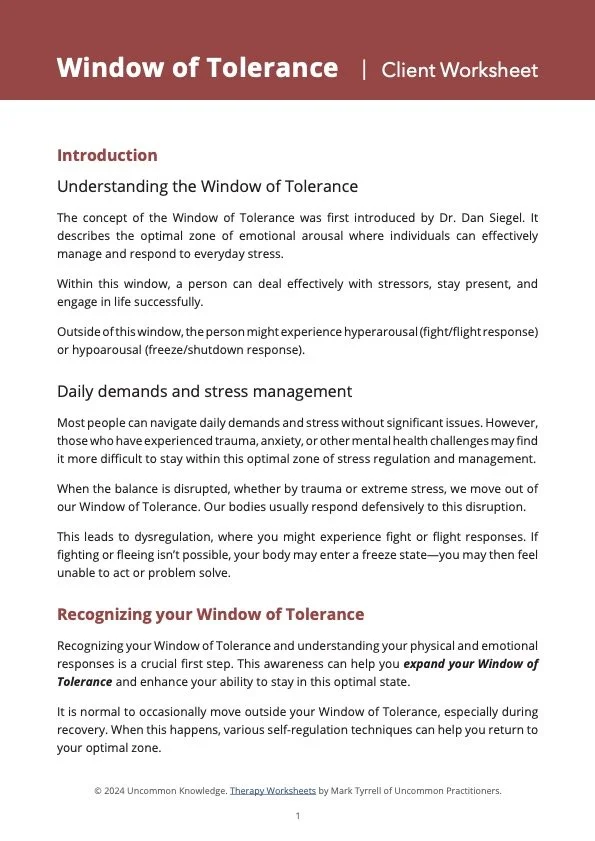
Window of Tolerance - A more detailed explanation and exercises to understand your own window of tolerance.
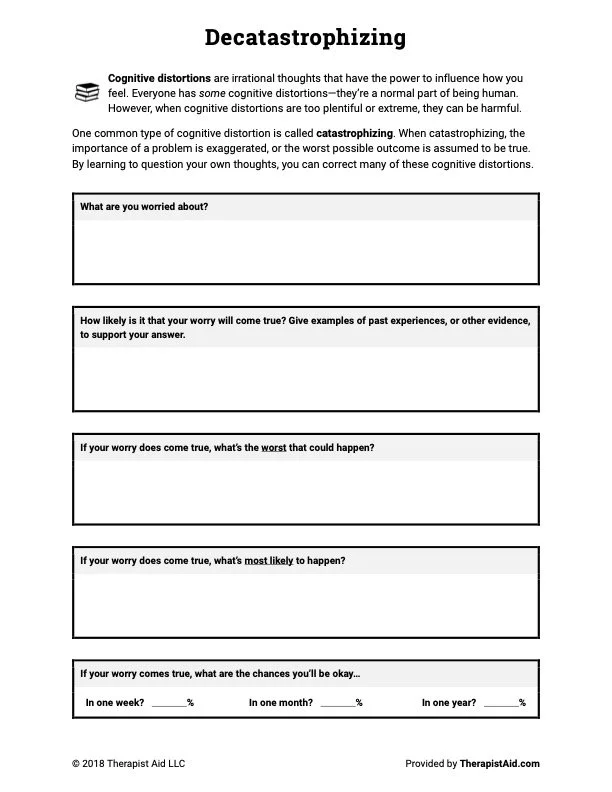
Decastrophizing - challenge and reduce exaggerated, worse case scenario thinking (catastrophizing) .

Control - What you can and cannot control. Regain power by focusing on what you can change.
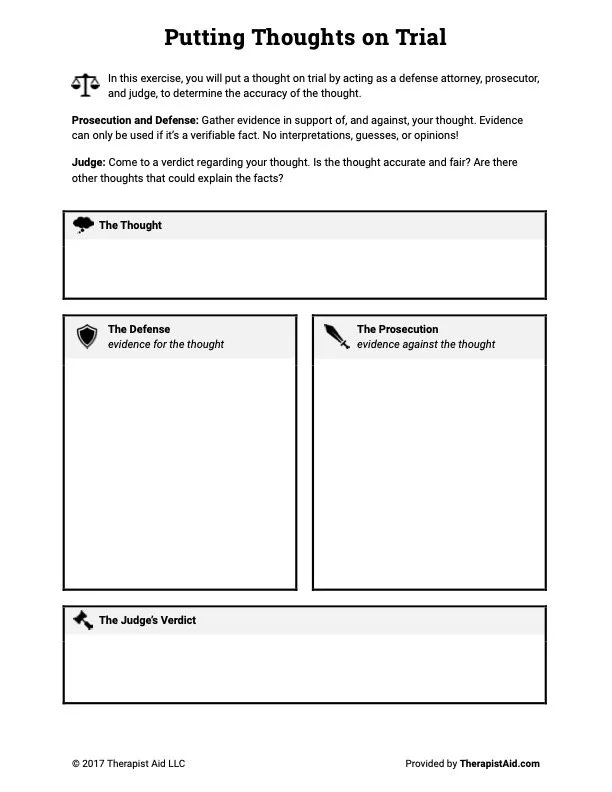
Putting Your Thoughts on Trial - put your thoughts on trial by acting as the prosecutor, defence attorney and judge to determine the accuracy of your thoughts.

Reactions: Change, Accept or Let Go - Use this flow chart to help you understand your reactions and how you move forward.